
A Bucket List
Famous doesn’t have to equal difficulty. In some cases it doesn’t (in others it does).
To a large extent the concept of ‘fame’ seems to be the product of the course on which a hole appears, whereabouts in the round it comes, and whether or not its been able to build up a history based on championship pedigree and television exposure
In no particular order we thought we’d highlight some of the more celebrated and briefly run through some of the Famous Golf Holes in Scotland
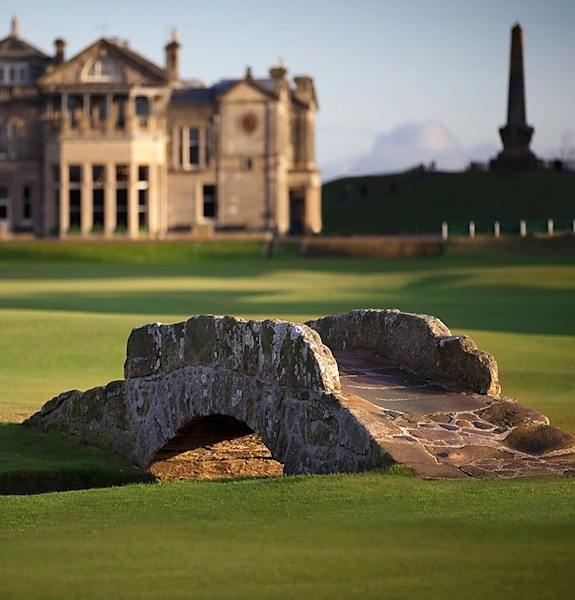
St Andrews Old Course 1st - 'Burn'
For many of us, this is likely to be the most nervous we’ll ever feel standing on the tee. Behind the large bay windows of the R&A’s headquarters judgemental members will be watching you drive. There’s a good chance that tourists will be lined up along the adjacent road with phones to the ready too. One appalling shank stands a chance of finding its way onto youtube!
In truth, it takes some missing, the fairway is very wide, although Ian Baker Finch did manage to carve one off to the left and down the road in 1995.
The Swilcan Burn crosses in front of the green with the pin often set close to the front to bring it into play, but it’s really a flick across the water and rarely catches players out. It’s not a difficult hole, but it certainly passes the ‘fame’ threshold
St Andrews Old Course 17th - 'Road'
All three scores are possible here, ‘bogey’, ‘double’ and ‘triple’. No hole on the Open rotation plays to a bogey more than the ‘Road Hole’, and it also has the distinction of providing the highest average score to par
The tee-shot is blind, played over a hotel wall into a fairway that narrows the further you try to advance on it. The approach is the key though. The green is narrow and set at 45 degree to the approach. Viewed from above it resembles a peanut, with bulbous ends and a slender middle. Playing to the nearest of these bulges leaves a lengthy putt over a ridge with little prospect of anything better than a par. Trying to hit the middle section is hideously difficult. Not only is it a mere 16yds in width to land on, it is brutally defended. The front is protected by a deep tapering bunker that draws bouncing balls into it. The rear is protected by a swail that rolls down to a road, carrying anything hit too firmly across the tarmac and up against a dry stone wall.
St Andrews Old Course 18th - 'Tom Morris'
In 1970 Jack Nicklaus drove the 18th green on the St Andrews Old Course. It prompted an old sage to remark “I see you’ve learnt the secret of this game”. Nicklaus took the bait and enquired. “Remove the need for a second shot”. Jack smiled.
In the 2010 this par 4 returned a compassionate scoring average of 3.6288, making it the easiest on the entire rotation. The ‘Valley of Sin’, with a pin placed near the front can cause players to misread a chip or putt from off the surface and have it roll back to their feet, but its otherwise regarded as a friendly hole. In 1995 this is what happened to Costantino Rocca, although he made miracle recovery to hole and force a play-off (which he lost)
The most famous putt is that of Doug Sanders in 1970. Needing to hole out from two-foot to secure the claret jug in blustery conditions he came off his shot to reset himself. On his second attempt his putt slid agonisingly wide and Nicklaus won the play-off. The hole is probably more about the vista, the Swilcan bridge, and ‘the walk’ up the fairway
Royal Troon 8th - 'Postage Stamp'
‘The Stamp’ kind of reminds us a bit of the ‘Mona Lisa’.
For centuries the world’s most famous painting hung in the Louvre relatively unnoticed, until it was stolen. By the it was recovered and returned, it had gained celebrity status.
The eighth hole at Royal Troon is a par 3, set in a sandhill, and surrounded by bunkers. Scotland’s got a few of these, one very obvious one at Royal Aberdeen which is also their 8th as well.
It took a 1909 article written in Golf Illustrated with more than hint of palpable protest about it rather than affection to work the trick. Willie Park Jnr described the eighth hole at Royal Troon as “A putting surface skimmed down to the size of a postage stamp”. What is it about this beautifully simple description that immediately ensured that everyone who read it, knew what this green was about? It’s fair to say the name stuck.
It’s all about the target ‘at the stamp’. From front to back the green measures 31yds. It’s protected by a phalanx of deep pot bunkers, two right, two left, and one centre front. It’s the width of the green that makes it so frightening. It measures just 9yds at it’s narrowest, and 14 yds at it’s widest (front bulge).
The thing is though, the hole isn’t that hard by S.I, but every now and then you can unravel on it and find yourself signing for a six or seven, which for an assignment measuring just 123yds is kind of cruel
Royal Troon 11th - 'Railway'
No hole on the Open championship rotation destroys like ‘the Railway’. A dog-leg right, the tee shot invites you to clear a sea of gorse to a distant fairway on a 45 degree angle. Too much club though and you’ll continue through the fairway and into more gorse on the other side. Almost certainly a lost ball. Under club it and you might as well not bother even looking for it
The approach is tight on on the ragged edge of reachable. An out-of-bounds railway line runs down your right, whilst the left side is guarded by bunkers. In 1962 Jack Nicklaus took a 10 here. In 1997 the British press reported “Tiger in the Jungle” as the newly crowned Masters Champion signed for a 7 on his first encounter. No hole taxes golfers for more triples or worse, and in 2016 some new illustrious names were added to the list of victims
Bubba Watson (7) Dustin Johnson (7) Rickie Fowler (8) and Louis Oosthuizen (9).
The Road Hole at St Andrews hurts you, the Railway Hole kills you
North Berwick 15th - 'Redan'
If imitation is indeed the ultimate complement of excellence, then the original Redan Hole, North Berwick, can probably lay claim to be considered the best hole in golf.
No single hole in the history of golf course architecture has been more copied. The yardage is important.
It’s designed to be reachable with a longer club and hence a shallower angle of approach. The green is set at an angle of forty five degrees to the approach, right to left. This reduces the available landing area. A Redan is characterised by a downward slope downward, typically the front right portion of the green towards the back. A shot played for the flag will roll away on the contours. You need to play for the edge and allow the ball to run. The final twist in the DNA concerns earthwork defences at the gatehouse. In golf, this means bunkers on the direct line, and the use of mounding at the front.
In the 2004 US Open, it was a Redan hole at the 7th that caused the problems at Shinnecock Hills. Retief Goosen understood that you don’t aim at the flag, and played it to par all week aiming at the front. No one else seemed to be able to hold the green
Carnoustie 18th - 'Home'
Connoisseurs of Carnoustie will probably tell you that its their sixth hole that we should be featuring. They might have a case
The par 5, Hogans Alley would certainly represent golfing aristocracy, and it was Hogans mastery of a magic line threaded between the fairway bunkers and the out of bounds fence in 1953 that earned him enough margin to lift the claret jug. With more than just a hint of ‘fence creep’ over the decades however, it’s perhaps not the formidable challenge today that it was then?
We’ve possibly confused ‘fame’ with ‘infamy’, but the 18th began it’s rise in 1975 when Johnny Miller miscounted when escaping from bunker (the bunker bears his name today). In 1999 it was the infamous quadruple taken by Jean van de Velde, with scenes of the Frenchman paddling about in the Barry Burn going all around the world as he threw away a claret jug that really cemented the reputation of Carnoustie’s closing hole in the consciousness of golfers all over the world. In 2006 Padraig Harrington and Sergio Garcia took it in turns to try and lose the Open at the 18th, both in regular play and the resulting shoot-out
The hole has become something of a drama magnet, a demanding par 4 with a snaking burn that hisses its way across the fairway and then snaps back again to guard the front approach to the green
Turnberry 9th - 'Bruce's Castle'
Technically, the ninth at Turnberry is a relative juvenile, but before today’s par 3 existed, Bruce’s Castle was a par 4 played in-land to a capricious fairway that possessed all the charisma and natural sense of justice of a pinball machine. You never did believe the Pro’s trying to pretend to speak affectionately about the unpredictable bounces it spat out at them, where perfectly well hit tee shots out pinged around before running out of bounds.
Despite this, the ninth was always regarded as the signature hole, and when the Open was televised at Turnberry, it was the lighthouse and the cup cake shaped outline of Ailsa Craig sitting out on the horizon that was used as the backdrop to the leaderboard. This helped give it profile too.
As part of Turnberry’s redesign it was reimagined as a par 3, that now plays from exposed tees over the rocky crags and waves to a new green cut underneath the Stevenson lighthouse. Everyone knew that this is how the hole should have been laid out for decades but never really dared to say it.
Some of the tours that feature these famous golf holes include
Testimonial
From LW from Canada
“Trusting someone to create a 30 day itinerary was scary, and after talking with several well-known companies, we started getting frustrated as none of them seemed to be able to put together quite what we wanted. Then we called Faraway Fairways and everything seemed to click. We loved every aspect of our trip, and we owe it all to Alun and his meticulous planning and personal attention. ”
From TM Georgia
“My family had a wonderful experience in large part because your team selected such meaningful balance of historical, cultural, and golf experiences. I can’t thank you enough for this terrific experience.”

From BB Canada
“I told Alun the courses I was interested in playing and he prepared a stay and play package with 14 days of outstanding golf, but also tremendous site seeing opportunities for my wife.”

From JC Illinois
“His attention to detail is amazing--I think our travel plan booklet ran to forty-eight pages, with gorgeous descriptions of cities and sights, plus maps showing where to go to catch trains, or walk from trains to hotels, sights and golf courses, etc.”

From DF Alabama & Pennsylvania
“I will cherish the memories for a long time- especially the wonderful times spent on and off the golf course with two of my brothers and brother-in-law. None of the memories and golf would have been possible or enjoyed without your tremendous planning and logistical support.”
AS from Colorado
“Alun and Faraway Fairways created possibly the most memorable golf trip we have ever experienced. EPIC is the only word that comes to mind.”

AC, From Florida/ New York, 2025
“We were hopeful to secure a 4 ball at St. Andrews while avoiding the massive expense other operators had quoted. He was very clear about the plan for achieving a tee time at the Old Course through the ballot, including detailed instruction on how it could be done, and what our odds were. He suggested mid- to late April as the best chance of success and advised that this is also the least rainy part of the year. We took his advice and trusted the process. Well, he was right on all counts!”

From SB, Minnesota
“We wholeheartedly recommend Alun and Faraway Fairways if you’re looking for a golf trip that is effortless, enjoyable, and truly unforgettable—even for a non-golfer in the mix! My husband and I will be daydreaming about this trip for years to come. 5.5 stars!”

From JB, California
“The best part was that the service was surprisingly affordable. They were thousands of dollars below other quotes that I received, in fact the prices were very similar to what I would have paid if I would have booked everything on my own.”
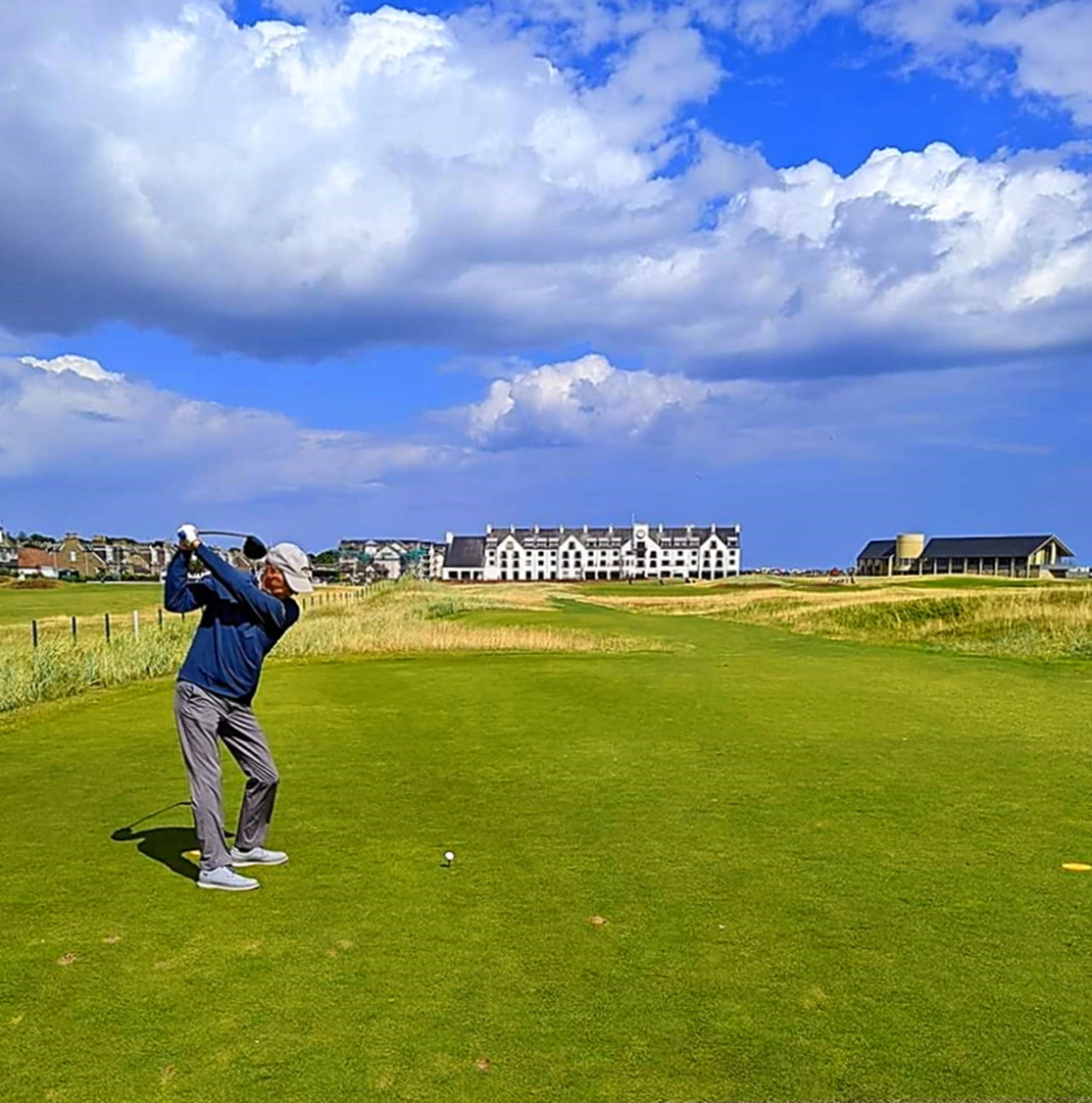
From JCA, Maryland
“I would and will highly recommend your company to anyone looking to plan an unforgettable golf trip. Thank You for putting together a fantastic trip for J.C. and me”

From WF Connecticut
“I think all eight of us would agree that Alun at Faraway Fairways did an absolutely wonderful job of putting this “golf vacation of a lifetime” together for us. His focus on the details was extraordinary from the choice of courses and the timing of the tee times, the amazingly beautiful accommodations along with some excellent meal selections, and the transportation options he provided to get us from place to place.”

From DR South Carolina
“You are about to tee it up in your Major. Seek wisdom, integrity and professionalism. Alun Davies and Faraway Fairways will not disappoint you. They cannot assure a calm sunny day with temperatures in the 70’s on the Old Course.”

From MM, California
“One fantastic trip you organized, and more importantly took ownership of in terms of daily communication and stewardship during our 2+ weeks in Scotland and Ireland. The logistics were spotless…100% of the transports were on time and excellent, the lodging choices spectacular and the golf was off the charts in terms of quality and arrangements made”
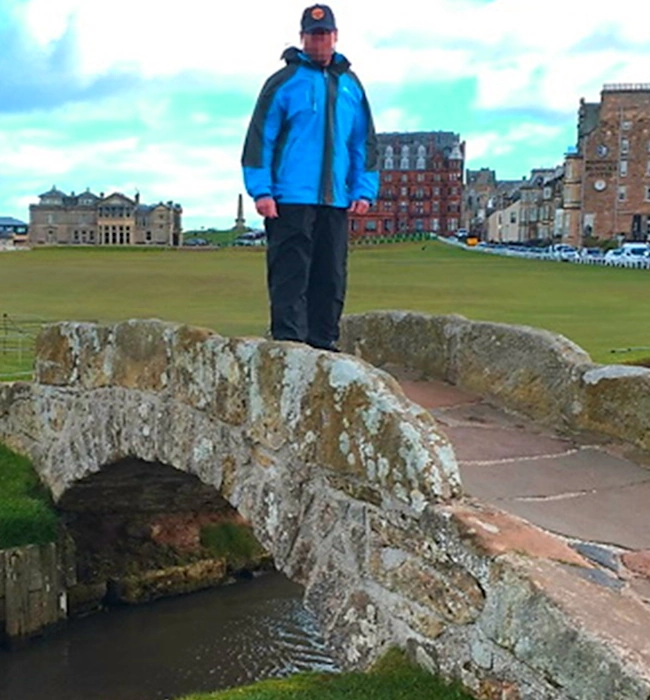
DH from California
“You cannot go wrong with the support Faraway Fairways offered. I did this trip solo and all last minute but I have already begun to plan the next trip which will include my best golfing buddies. ”
Enquiry
We don't need to make this an ordeal by 101 filtering questions! In reality there are probably little more than half a dozen things we need to know to build out a proposal. The guidance below might help you frame answers
Duration - usually best expressed as a range up to a maximum
Time of year - can be anything from a specific date range to a named season
Travel class - Faraway Fairways uses 'Luxury', 'Premier' or 'Affordable' for generic purposes. You might choose to reference the international 'star' rating system. We're only looking for something to help steer us into the right sector
Self drive or hired driver - In broad terms, self driving is normally less expensive, and much more flexible, but some folk just don't want to do it
Must play courses/ must do places - a few name checks is all that's needed